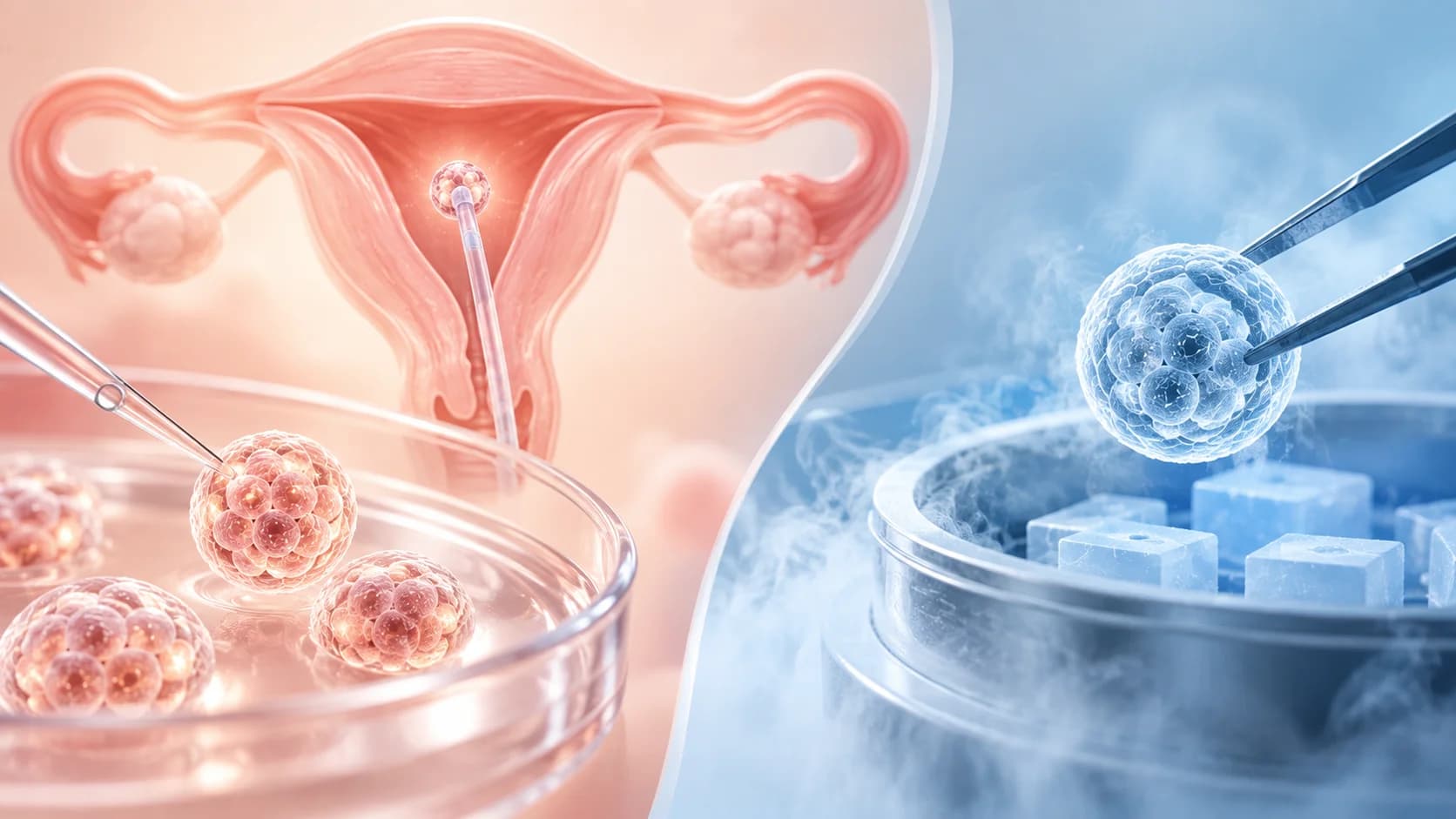
What is Biochemical Pregnancy? Symptoms, Causes, and Impact on the IVF Process


For couples undergoing IVF treatment, the waiting period after embryo transfer is filled with great excitement and hope. A positive pregnancy test result at the end of this process creates justifiable joy. However, sometimes this joy can give way to despair when blood tests show a drop in values shortly afterward. This condition, called biochemical pregnancy (chemical pregnancy or very early pregnancy loss) in medicine, is not, contrary to popular belief, a permanent obstacle to becoming parents. In this article, we have compiled the answers to critical questions frequently asked during the IVF process, such as "What is biochemical pregnancy?", "Why does it occur?", and "How does it affect the next IVF attempt?".
What is Biochemical Pregnancy?
Biochemical pregnancy is an early pregnancy loss that begins with the fertilized egg attempting to attach to the uterine wall, but ends spontaneously before a gestational sac is clinically visible on ultrasound. In the early stages of pregnancy, the fertilized cells begin to release a pregnancy hormone called Beta-HCG (human chorionic gonadotropin). Since this hormone can be detected in blood or urine tests, this is technically considered the start of pregnancy (biochemical evidence). However, because the embryo cannot develop healthily, a gestational sac cannot form and is expelled from the body with menstrual bleeding.
Therefore, a biochemical pregnancy is considered a miscarriage that occurs very early in the pregnancy.
What are Beta hCG Levels Like in Biochemical Pregnancy?
The beta hCG hormone initially tests positive but doesn't rise as expected. Often: The first test may be positive The increase in value is slow A decrease begins in the following days In healthy pregnancies, beta hCG usually increases significantly approximately every 48 hours. In biochemical pregnancy, however, this regular increase is not observed.
What is the Difference Between Biochemical Pregnancy and Clinical Pregnancy?
Pregnancy processes are divided into two main groups according to the methods of diagnosis:
Biochemical Pregnancy: Pregnancies that can only be detected with blood (Beta-HCG) or urine tests and end before reaching the ultrasound stage.
Clinical Pregnancy: Pregnancies where, after a positive blood test, the gestational sac and fetal heartbeat can be clearly seen with an ultrasound examination in the 5th or 6th week of pregnancy.
In short, a biochemical pregnancy is a very early loss that ends before reaching the clinical pregnancy stage.
What are the Signs of a Biochemical Pregnancy?
Most women who conceive naturally aren't even aware they're experiencing a biochemical pregnancy. They might simply interpret it as a period that's a few days late and perhaps a little heavier or more painful. However, in IVF treatment, the process is closely monitored and regular blood tests are performed, so this is immediately noticeable. The most common signs are:
Irregular Beta-HCG Levels: The hormone level, which was positive in the first test, decreases or remains constant in a repeat test 48 hours later instead of doubling.
Light Bleeding and Spotting: Spotting that begins around the time of the expected period. Mild Pelvic Pain: Cramps similar to normal menstrual cramps.
Disappearance of Pregnancy Symptoms: Symptoms such as breast tenderness or mild nausea felt in the first few days suddenly stop.
Why Does a Biochemical Pregnancy Occur?
A biochemical pregnancy is not caused by a mistake made by the prospective mother or father. It is the body's way of stopping an unhealthy pregnancy through a natural selection mechanism. The most common causes are:
Chromosomal Abnormalities in the Embryo: More than 50% of early pregnancy losses are due to genetic or chromosomal abnormalities in the embryo. The embryo is incompatible with life due to structural errors in the sperm or egg.
Intrauterine Factors: Insufficient thickening of the uterine lining (endometrium), fibroids, polyps, or structural abnormalities in the uterus can make it difficult for the embryo to implant.
Hormonal Imbalances: Deficiencies in progesterone or thyroid hormones can lead to early termination of pregnancy.
Advanced Maternal Age: As a woman's age increases (especially over 35), it reduces egg quality and increases the risk of chromosomal abnormalities.
Clotting and Immune Problems: Problems in the mother's immune system or blood clotting mechanism can prevent the embryo from receiving nourishment.
Embryo Quality: Especially in IVF treatment, embryo quality plays a crucial role in the continuation of the pregnancy.
Is Biochemical Pregnancy More Common in IVF Treatment?
Actually, biochemical pregnancies can also occur in natural pregnancies. In naturally conceived pregnancies, they are often undetected because they are considered a short-term missed period. However, in IVF treatment, they are more frequently detected because beta hCG monitoring is done early and regularly. In natural pregnancies, many biochemical pregnancies can occur as a missed period without the person even noticing. In IVF treatment, however, early losses are detected because regular hormone measurements are taken after embryo transfer. Therefore, the occurrence of a biochemical pregnancy does not necessarily mean that there is a serious problem.
Is This a Failure?
Absolutely not. On the contrary, this is a positive sign that the woman's body is capable of becoming pregnant, that the embryo can interact with the uterine wall, and that the implantation process can begin. Compared to no pregnancy at all, couples who experience a biochemical pregnancy have a statistically higher chance of success in their next attempt.
Is Curettage Necessary After a Biochemical Pregnancy?
In most biochemical pregnancies, curettage is not necessary. This is because the pregnancy ends very early, and the body can naturally expel the pregnancy tissue. Usually, there is menstrual-like bleeding lasting a few days, and monitoring is done until the beta hCG level drops to zero. However, if there is heavy bleeding, severe pain, or suspicion of an ectopic pregnancy, a doctor's evaluation is absolutely necessary.
When Can You Try Again After a Biochemical Pregnancy?
This timeframe varies from person to person. A biochemical pregnancy does not require surgical intervention (curettage). The body completely clears the pregnancy material through normal menstrual bleeding. Therefore, no damage or residue remains in the uterus. Most of the time, the body returns to normal quickly, and pregnancy can be planned again after the next menstrual period. However, if the underlying cause needs to be investigated or additional treatment is required, your doctor may make a different plan. Feeling ready both physically and emotionally is important in this process. For our patients with frozen embryos, a new transfer schedule can be quickly created in consultation with our doctor.
Can Biochemical Pregnancies Reoccur?
Having a biochemical pregnancy once does not mean that healthy pregnancies will not occur in the future. In fact, many couples can achieve healthy pregnancies in subsequent attempts. However, if the situation recurs, detailed investigation may be recommended. Specifically, the following assessments may be performed:
Hysteroscopy or hysterosalpingography
Genetic examinations
Coagulation tests
Thyroid and hormone tests
Embryo quality assessment In IVF treatment, methods such as PGT-A may be planned for some couples to select genetically healthy embryos.
When Should Further Investigations Be Performed?
In the case of a single biochemical pregnancy, in-depth investigation is usually not necessary. However, in cases of repeated biochemical pregnancies (2 or more), the following further investigations may be planned to find the underlying causes:
Karyotype Analysis: Mapping the chromosomes of the prospective mother and father.
Thrombophilia (Clotting) Panel: Determining clotting tendencies.
NGS/PGT (Preimplantation Genetic Diagnosis): Genetically screening of embryos before transfer.
Hysteroscopy or Hysterosalpingography (HSG): Examining intrauterine adhesions, fibroids, or polyps.
Our Clinic is Ready to Help
Although biochemical pregnancy may seem like a discouraging stop on your IVF journey, it is actually proof that you are one step closer to your goal. With our experienced team of physicians, laboratory infrastructure, and personalized treatment protocols, we are with you every step of the way to help you achieve your dream of becoming a mother and father.
To get detailed information about your process and to make an appointment, you can call us anytime at +902242515000 or via our WhatsApp line at +90(530) 886 52 63.
Last updated: