
Fibroids and IVF: Which Fibroids Need Treatment?

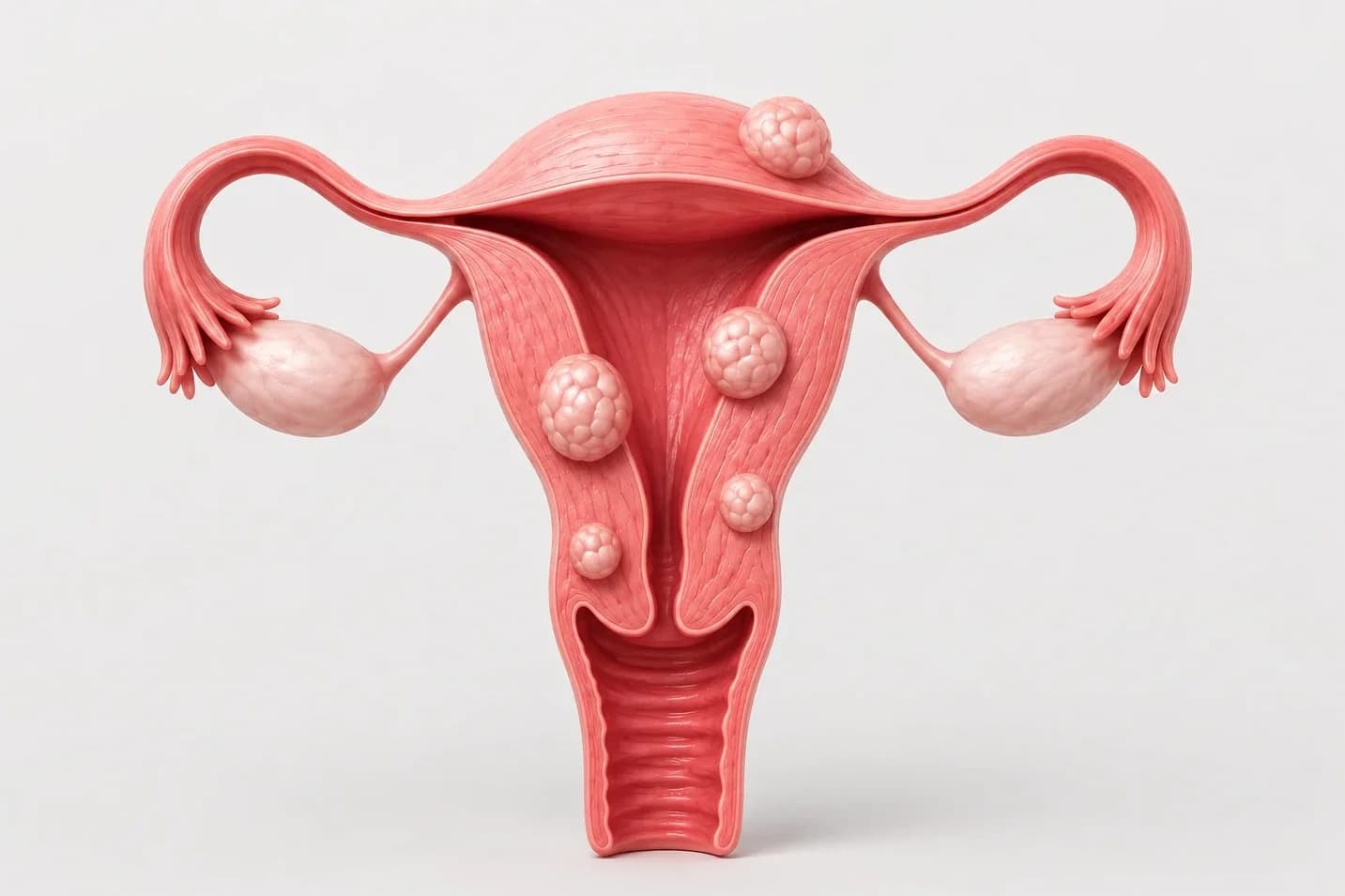
Many women preparing for IVF (in vitro fertilization) wonder whether their treatment will be affected when a fibroid is found on ultrasound. However, not every fibroid has a negative effect on embryo transfer or the chance of pregnancy. In IVF, what matters is not whether a fibroid is present, but whether it affects the uterine cavity where the embryo will implant.
What Is a Fibroid?
Fibroids (uterine leiomyomas) are benign (non-cancerous) tumors that develop from the muscle layer of the uterus. They are one of the most common gynecological conditions in women of reproductive age and can be found in roughly 1 in 4 women. They often remain present for years without causing any symptoms and are discovered by chance during a routine gynecological exam.
Being diagnosed with a fibroid often causes worry. However, the most important thing to know is that not every fibroid needs treatment and not every fibroid prevents pregnancy. The decision to treat is made by considering the fibroid's location, its size, the symptoms it causes and the woman's pregnancy plans together.
What Are the Symptoms of Fibroids?
A large share of fibroids cause no symptoms at all. In other words, you may have one or more fibroids without being aware of them, which is why they are often found incidentally. Depending on their size, number and location, however, they can cause a variety of complaints.
The most common symptoms are:
- Heavy menstrual bleeding
- Longer periods
- Menstrual bleeding with clots
- Anemia
- Groin or pelvic pain
- Frequent urination
- Constipation
- A feeling of bloating in the abdomen
- Pain during sexual intercourse
In some women, fibroids may show up as difficulty getting pregnant or recurrent miscarriages.
Why Does the Type of Fibroid Matter So Much?
The most important feature that determines a fibroid's effect on pregnancy is its location rather than its size. Depending on where they sit in the uterus, fibroids are divided into three main groups:
1. Submucosal Fibroids
Submucosal fibroids grow into the uterine cavity. Because they distort the endometrial surface where the embryo implants, they are the type of fibroid with the greatest impact on IVF success.
These fibroids:
- may lower the implantation rate,
- may increase the risk of miscarriage,
- may negatively affect the success of embryo transfer.
For this reason, international guidelines recommend strongly considering hysteroscopic removal of submucosal fibroids that distort the uterine cavity before transfer.
2. Intramural Fibroids
Intramural fibroids are located within the muscle layer of the uterus. This is the most debated type of fibroid in IVF treatment. If it deforms the uterine cavity, surgical treatment may be considered. For intramural fibroids that do not distort the cavity, however, the scientific evidence is more complex.
Although current studies show that these fibroids may affect some fertility parameters, it has not been clearly proven that removing them surgically increases IVF success rates in every patient. For this reason, there is no standard approach for intramural fibroids.
The decision is made individually by considering:
- the patient's age,
- AMH level,
- ovarian reserve,
- previous failed embryo transfers,
- how close the fibroid is to the endometrium,
- clinical symptoms
together.
Intramural fibroids larger than 4-5 cm and located close to the uterine cavity are evaluated more carefully. However, large size alone does not automatically mean surgery.
3. Subserosal Fibroids
Subserosal fibroids grow toward the outer surface of the uterus. As long as they do not distort the uterine cavity, these fibroids generally do not affect embryo implantation. Scientific studies show that there is no strong evidence that removing symptom-free subserosal fibroids improves IVF success.
Therefore, if the fibroid:
- does not cause pain,
- does not put significant pressure on surrounding organs,
- does not make embryo transfer technically difficult,
monitoring is preferred over surgery in most patients.

Types of fibroids by location.
How Are Fibroids Diagnosed?
Fibroids are usually diagnosed during a gynecological exam or a routine ultrasound. Especially in women planning a pregnancy or preparing for IVF, it is not enough to know that a fibroid is present; it should be assessed in detail whether it affects the uterine cavity, whether it makes embryo transfer more difficult and whether it is in a position that could affect the chance of pregnancy.
The main diagnostic methods are:
- Transvaginal Ultrasound (TVUS): This is the first-choice imaging method for evaluating fibroids. Transvaginal ultrasound allows a detailed look at the number, size and location of fibroids and how close they are to the uterine cavity. For most patients, ultrasound is sufficient for diagnosis.
- Saline Infusion Sonography (SIS): Even when a fibroid is visible on ultrasound, it may not be fully clear how much it affects the uterine cavity. In that case, Saline Infusion Sonography (SIS), performed by introducing sterile saline into the uterus, can be used. This examination is particularly helpful for evaluating submucosal fibroids or intramural fibroids that distort the uterine cavity.
- Hysteroscopy: Hysteroscopy is a method that allows the uterine cavity to be viewed directly with a thin camera. It is one of the most reliable methods for diagnosing fibroids that protrude into the uterus. When needed, small submucosal fibroids can be removed hysteroscopically in the same session, so diagnosis and treatment can be carried out together.
- Magnetic Resonance Imaging (MRI): Although it is not needed for every patient, MRI may be preferred for women with multiple fibroids or when large fibroids need a detailed assessment. MRI is especially helpful for patients who will undergo surgical planning, as it shows the number and location of fibroids and their relationship to surrounding tissues in more detail.
How Are Fibroids Treated?
Fibroid treatment is planned according to the patient's age, her wish to have children, the fibroid's location and the symptoms it causes. The goal is not to remove every fibroid, but to treat at the right time those fibroids that could reduce the chance of pregnancy. Treatment is entirely individualized. Not every fibroid needs surgery.
Treatment options include:
Regular monitoring: For small fibroids that cause no symptoms, ultrasound checks at regular intervals may be all that is needed.
Medication. In some patients, medication may be used to reduce bleeding or to shrink the fibroid before surgery. However, medication does not eliminate the fibroid completely.
Myomectomy (Fibroid Surgery): This is the most commonly preferred surgical method for women planning a pregnancy. In this operation, only the fibroid is removed while the uterus is preserved.
Depending on the fibroid's location, one of the following approaches is chosen:
- hysteroscopic,
- laparoscopic (minimally invasive),
- open surgery
as appropriate.
Can IVF Be Done If You Have Fibroids?
Yes. Finding a fibroid does not in itself rule out IVF treatment. The main goal is to assess whether the environment inside the uterus, where the embryo will implant, is suitable.
For this reason, the following questions are answered for every patient:
- Does the fibroid distort the uterine cavity?
- Does it make embryo transfer more difficult?
- Does it cause heavy bleeding or pain?
- Is there a history of previous failed transfers?
The most suitable treatment plan is created based on the answers to these questions.
Do Fibroids Affect IVF Treatment?
This is one of the most frequently asked questions in IVF. The key question here is not "Is there a fibroid?" The real question is: "Does the fibroid affect the uterine cavity where the embryo will implant?"
Scientific studies show that:
- Submucosal fibroids that distort the uterine cavity can lower IVF success rates.
- Large intramural fibroids that push on the uterine cavity may also have a negative effect in some patients.
- For subserosal fibroids that have no relationship with the uterine cavity, surgery is usually not necessary and IVF treatment can be planned safely.
For this reason, not every fibroid is operated on. The decision to operate is made by considering the type and location of the fibroid, the patient's age, ovarian reserve and previous pregnancy or IVF history together.
Fibroid Surgery First, or Embryo Freezing First?
There is no single right answer to this question. The decision is entirely individual.
Surgery-first approach: Fibroid surgery may be considered first in the following situations:
- Fibroids that distort the uterine cavity
- Heavy menstrual bleeding
- Anemia
- A uterine deformity that makes it technically difficult to pass the catheter during embryo transfer
IVF treatment begins after the recovery period following fibroid surgery. The length of recovery depends on the type of surgery performed.
Embryo freezing first: Particularly in patients of advanced maternal age, with low AMH or diminished ovarian reserve, a strategy of first retrieving eggs and freezing embryos may be preferred. This helps prevent the age-related loss of egg quality during the waiting period after surgery.
Monitoring and direct transfer: For fibroids that are small, stable, do not affect the uterine cavity or the uterine lining, or cause no symptoms, embryo transfer can be planned directly without surgery.
The goal is both to protect ovarian reserve and to create the best possible uterine environment for embryo transfer.
Summary
The presence of a fibroid alone does not determine the success of IVF treatment. What really matters is whether the fibroid affects the uterine cavity (endometrial cavity) where the embryo will implant. Submucosal fibroids usually require treatment because they can reduce the chance of pregnancy, while symptom-free subserosal fibroids can be monitored in many patients without any intervention. Intramural fibroids, on the other hand, form a "gray zone" that must be assessed separately for each patient and cannot be managed with strict rules.
However, today's approach is not simply to decide based on the fibroid's location or size. Every patient's treatment plan should be individualized. Many factors should be considered together, such as the woman's age, her infertility history, whether she has had previous failed embryo transfers, the number of embryos available, embryo quality and whether euploid (chromosomally normal) embryos are available.
For example, a fibroid that does not noticeably affect embryo implantation before transfer may grow during pregnancy and lead to a risk of preterm birth, fetal growth restriction, pain or additional problems during pregnancy follow-up. For this reason, decisions should take into account not only implantation success but also the safe continuation of the pregnancy.
Similarly, the approach for an older patient with only one embryo may differ from that for a young patient with many embryos. Especially when the available embryo is a "last chance," the possible risks posed by the fibroid should be assessed in greater detail and the treatment plan shaped accordingly. In some patients, it may be a better strategy to create embryos first and plan fibroid surgery after good-quality or euploid embryos have been obtained.
In conclusion, there is no single right approach to fibroid treatment that applies to every patient. The goal is to avoid unnecessary surgery while managing, at the right time, any conditions that could affect embryo transfer and the healthy progression of pregnancy. For this reason, the treatment plan should be fully personalized and created after discussing the possible benefits and risks in detail with the patient.
Frequently Asked Questions
Does every fibroid require surgery?
No. Fibroids that cause no symptoms and do not distort the uterine cavity usually do not require surgery.
Does a subserosal fibroid lower IVF success?
Generally, no. There is no strong scientific evidence that subserosal fibroids that do not affect the uterine cavity reduce fertility.
Must an intramural fibroid always be removed?
No. The decision to operate is made by considering the fibroid's effect on the uterine cavity, its size, the patient's age, ovarian reserve and previous treatment history together.
How soon after fibroid surgery can IVF be done?
After hysteroscopic procedures, especially for submucosal fibroids, it may be possible in the next menstrual cycle. After laparoscopic or open myomectomy, the timing of transfer is planned individually according to the extent of the surgery.
Can a fibroid turn into cancer?
Generally, no. Fibroids are benign tumors, and the likelihood of them turning into cancer is very low.
Do fibroids go away on their own?
They usually do not disappear completely. However, they may shrink after menopause as hormone levels decline.
Is a fibroid an obstacle to IVF treatment?
No, not always. Not every fibroid affects IVF success. Especially with fibroids that do not distort the uterine cavity, treatment can usually continue as normal.
Do fibroids grow during IVF treatment?
Rising estrogen levels could theoretically make them grow, but because the treatment is short, growth is not always observed in practice.
Last updated: