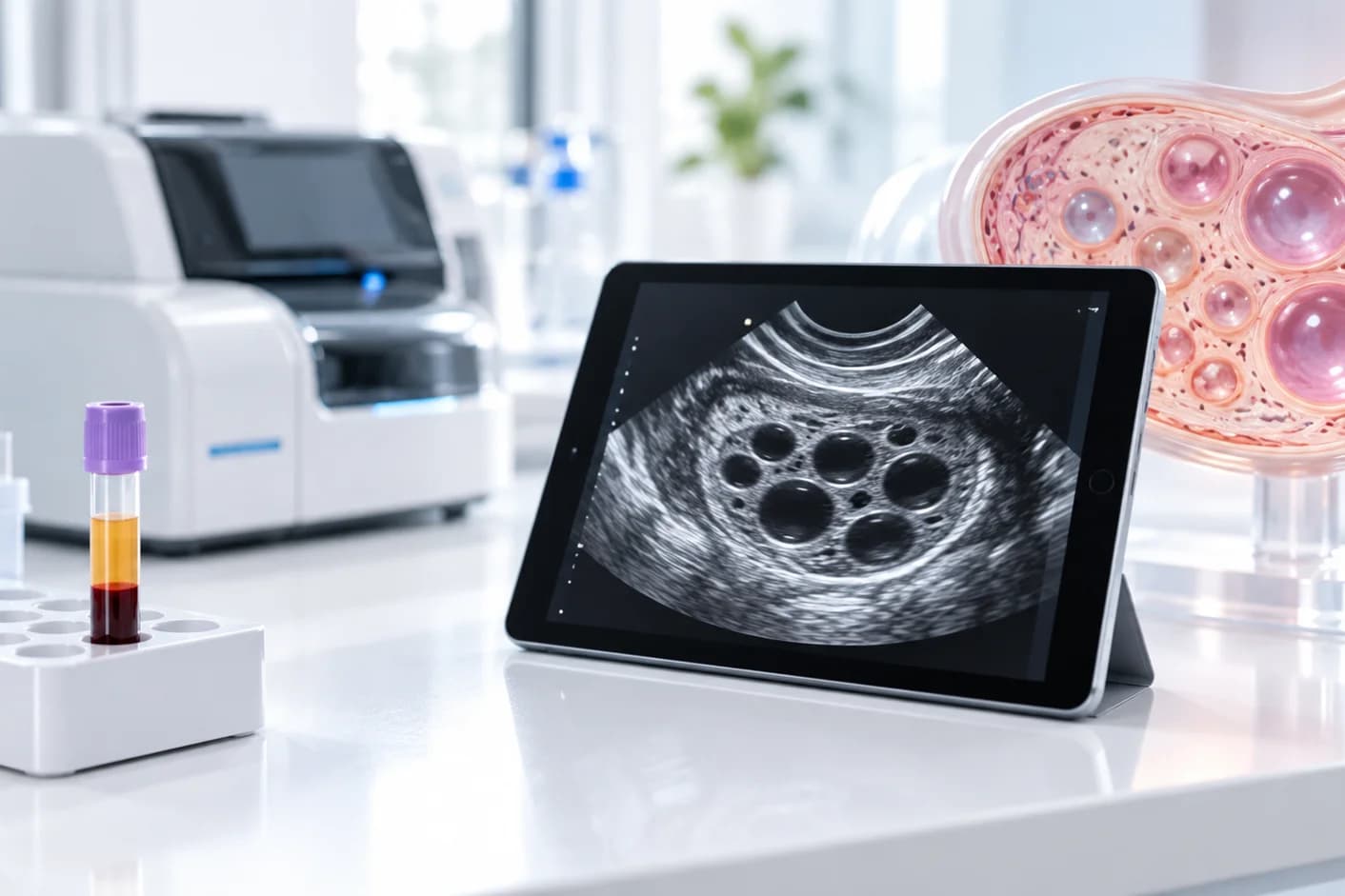
Frozen or Fresh Embryo Transfer: Which Is More Successful?

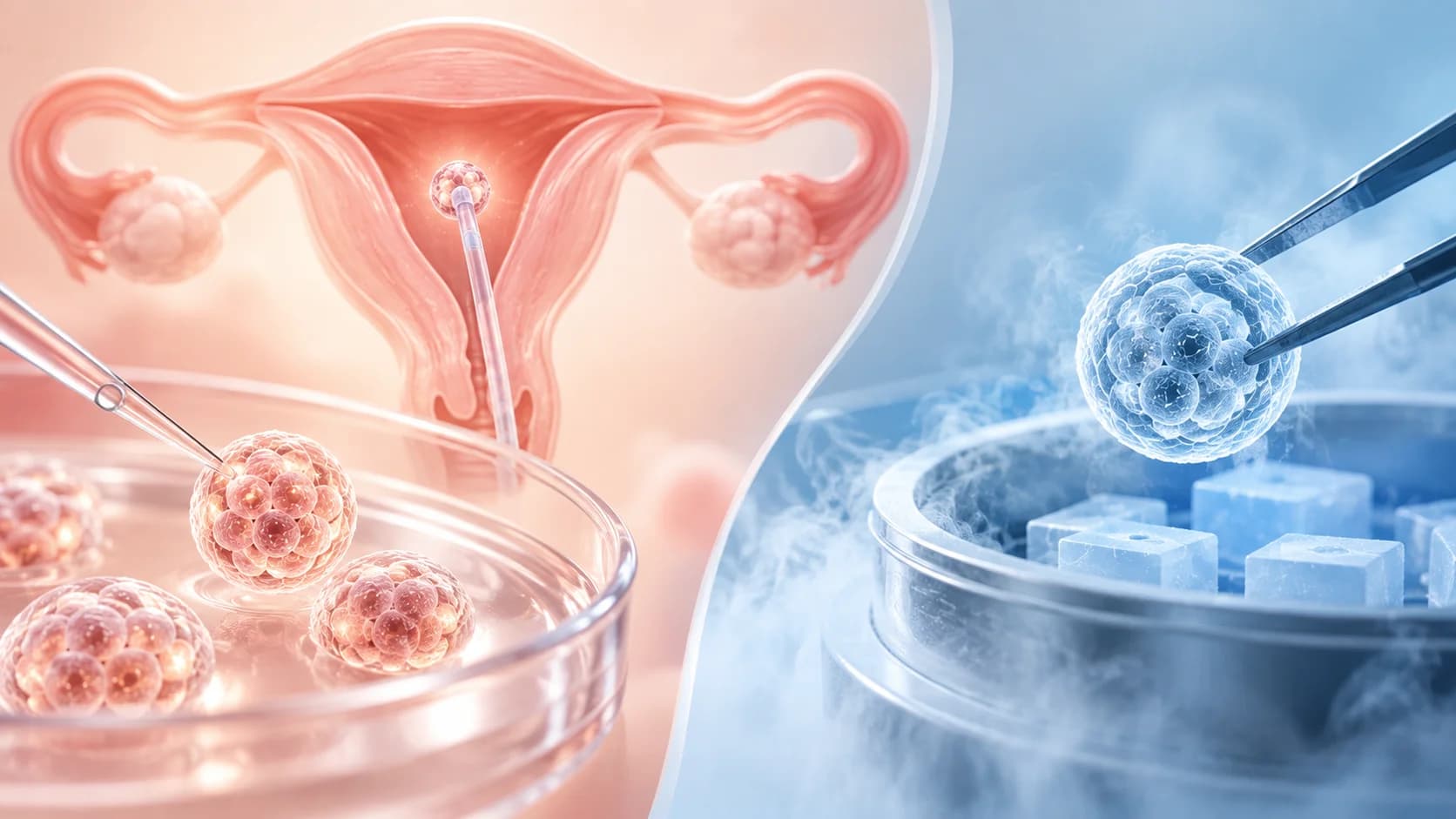
In IVF treatment, once the eggs have been retrieved and fertilized with sperm, one of the key decisions is when to transfer the resulting embryos into the uterus. An embryo can be transferred fresh in the same treatment cycle in which the eggs were retrieved, or, when conditions are suitable, it can be frozen and transferred in a later menstrual cycle as a frozen embryo transfer (FET).
This brings us to one of the questions our patients ask most often:
"Is a fresh embryo transfer or a frozen embryo transfer more successful?"
There is no single answer that applies to every patient. Today, both transfer methods are an important part of IVF treatment. When choosing the transfer method, many factors are assessed together, including the woman's age, ovarian reserve, how the ovaries respond to treatment, hormone levels, the condition of the uterine lining (endometrium), embryo characteristics, the risk of OHSS and whether genetic testing is planned.
So the goal is not to declare one method, fresh or frozen, superior for all patients, but to determine which method is better suited to each individual patient.
What Is a Fresh Embryo Transfer?
A fresh embryo transfer means placing the embryo into the uterus within the same IVF treatment cycle in which the eggs were retrieved and the embryos were created.
After egg retrieval (OPU), the mature eggs are fertilized with sperm and the resulting embryos are monitored in the embryology laboratory. Depending on the condition of the patient and the embryos, the embryo selected as suitable is usually transferred into the uterus on day 3 or day 5 of its development.
A key feature of a fresh transfer is that egg retrieval and embryo transfer can take place within the same treatment process, so there is no need to wait for a new menstrual cycle before the transfer.
However, having a well-developing embryo is not enough on its own for a fresh transfer. The patient's hormonal status, uterine lining and overall clinical condition must also be suitable for the transfer.
What Is a Frozen Embryo Transfer?
In a frozen embryo transfer, the suitable embryos obtained during IVF treatment are not placed into the uterus in the same treatment cycle. Instead, the embryos are frozen and stored, and then transferred in a later menstrual cycle.
Today, embryos are most commonly frozen using vitrification, also known as rapid freezing. This method uses very fast cooling to minimize the formation of ice crystals that could damage the embryo's cellular structure.
When the transfer is planned, the uterine lining is prepared so that it is receptive to the embryo. The embryo is then thawed and transferred into the uterus at the right time.
Freezing all suitable embryos without performing a fresh transfer is called the "freeze-all" strategy. Freeze-all is not a method that should be used routinely for every patient; it is preferred in specific clinical situations.
What Is the Difference Between Fresh and Frozen Embryo Transfer?
The most notable difference between the two methods is the timing of the transfer and the hormonal environment of the uterus at the time of transfer.
In a fresh transfer, the embryo is transferred in the same cycle in which the ovaries were stimulated with medication and the eggs were retrieved. In a frozen embryo transfer, the embryo is stored and the transfer takes place in a different menstrual cycle.
During ovarian stimulation, levels of estrogen and other hormones can differ from those of a natural menstrual cycle. In some patients, this hormonal environment can affect the synchronization between the embryo's development and the window in which the endometrium is ready to receive the embryo.
For this reason, freezing the embryos and preparing the uterus in a later cycle may be advantageous for certain patients. However, this does not mean that a frozen embryo transfer will lead to a higher pregnancy or live birth rate for every patient.
When May a Frozen Embryo Transfer Be Preferred?
- If the risk of OHSS is high
Ovarian hyperstimulation syndrome (OHSS) is a condition that develops when the ovaries overrespond to the medications used in treatment, and it can become serious. Particularly in patients who develop a large number of follicles and are at high risk of OHSS, the hCG hormone that rises with pregnancy can make the condition last longer or become more severe.
For this reason, freezing the embryos and postponing the transfer to a later date is considered especially in patients who develop many follicles or have high estradiol levels. This decision prioritizes the mother's safety, not embryo quality. The embryo transfer can be postponed until the patient's clinical condition has returned to normal.
- If progesterone has risen early
In a fresh embryo transfer, the timing between the embryo and the endometrium is very important.
In some patients, progesterone levels rise earlier than expected in the period before egg retrieval, which can affect the development of the endometrium. In this case, the synchronization between the embryo's developmental stage and the window in which the endometrium is ready to receive the embryo may be disrupted.
Because there is no single progesterone threshold that applies to all patients, the decision is not based on a single laboratory result. The patient's hormone levels, number of embryos and overall treatment characteristics are evaluated together.
- If the uterine lining is not suitable for transfer
For a successful embryo transfer, the uterine lining needs to be assessed just as carefully as the embryo.
The transfer may be postponed if the endometrium has not developed sufficiently, if fluid is seen inside the uterus, or if there are certain intrauterine problems that could adversely affect the transfer.
In this case, the embryos are frozen and stored, and the transfer is planned once the uterine conditions have been made suitable.
- If a problem such as a polyp or fibroid is detected
If an endometrial polyp affecting the uterine cavity or a fibroid (myoma), particularly one extending into the uterine cavity, is detected, this may need to be evaluated before the embryo transfer.
Depending on the patient's clinical situation, the transfer may be postponed and the embryos frozen.
- If there is a hydrosalpinx
A hydrosalpinx, meaning a buildup of fluid in the fallopian tubes, can reduce the chance of the embryo implanting in the uterus in some patients.
If a hydrosalpinx is detected during IVF treatment, depending on the patient's situation, postponing the embryo transfer and first addressing the tubal problem may be considered.
- If genetic testing is planned
If preimplantation genetic testing (PGT) is planned for the embryos, a biopsy is taken from the embryo at the blastocyst stage.
Because genetic analysis takes time, the embryos are frozen by vitrification after the biopsy. Once the genetic test results are available, the embryo found suitable for transfer is thawed and transferred in a later cycle.
When May a Fresh Embryo Transfer Be Preferred?
The fact that frozen embryo transfer has become widespread does not mean that fresh embryo transfer is no longer used.
Although embryo survival after thawing is very high with modern vitrification, every laboratory procedure has its own technical requirements and a margin of variability. In a fresh transfer, the embryo does not go through this additional step.
For patients with a low risk of OHSS and with hormone levels and an endometrium found suitable for transfer, a fresh transfer remains a successful option. The increasing use of frozen embryo transfers does not mean that fresh embryo transfer has been abandoned.
One important advantage of a fresh transfer is that treatment can be completed in a shorter time. There is no need to freeze the embryo and prepare for a new transfer in a later menstrual cycle.
Therefore, when the necessary conditions are met, a fresh transfer is still an effective and valid option in IVF treatment.
How Is a Frozen Embryo Transfer Performed?
The main goal of a frozen embryo transfer is to synchronize the uterine lining with the developmental day of the embryo.
Preparation for the transfer can generally be carried out in a natural cycle or in a medicated/programmed cycle.
Frozen Embryo Transfer in a Natural Cycle
In women who have regular periods and ovulate regularly, the woman's own menstrual cycle can be monitored.
Follicle development and the timing of ovulation are determined by ultrasound and, when needed, hormone tests. The transfer day is planned by taking into account when ovulation occurred and the developmental stage of the embryo.
Medicated Frozen Embryo Transfer
In some patients, the uterine lining can be prepared with medications containing estrogen and progesterone.
Once the endometrium has developed under estrogen, progesterone is started. The transfer is performed when the duration of progesterone appropriate to the embryo's developmental day has been completed.
The choice of preparation method depends on the patient's menstrual pattern, ovulation status, previous treatments and clinical characteristics.
Does Freezing Harm the Embryo?
Advances in embryo freezing technology are among the most important developments in IVF treatment.
Unlike the slow freezing methods used in the past, the vitrification method used today allows embryos to be frozen very rapidly.
In experienced embryology laboratories, the survival rate after thawing for embryos with good characteristics is very high. Nevertheless, it would not be right to give a 100 percent guarantee for all embryos for any laboratory procedure.
The embryo's developmental characteristics before freezing, its developmental day, the laboratory's experience, the vitrification system used and the thawing process can all affect the outcome.
Frequently Asked Questions
Is a frozen embryo transfer more successful than a fresh transfer?
It is not accurate to say that a frozen embryo transfer is more successful for every patient. While a frozen transfer may offer advantages in certain patient groups, a fresh transfer is also an effective option for patients with suitable conditions.
What does freeze-all mean?
Freeze-all means freezing the embryos suitable for transfer obtained during IVF treatment without performing a fresh transfer, and postponing the transfer to a later menstrual cycle.
Can a frozen embryo result in a healthy baby?
Yes. Healthy pregnancies and live births can be achieved with embryos that have been frozen and later thawed. Vitrification is a widely used embryo freezing method in IVF laboratories today.
Does freezing and thawing reduce embryo quality?
With modern vitrification methods, embryo survival rates after thawing are very high. Nevertheless, the outcome can be influenced by the embryo's characteristics, developmental stage and laboratory conditions.
When is a frozen embryo transfer performed?
The timing of the transfer is planned according to the preparation protocol used, the patient's menstrual and ovulation pattern, the condition of the endometrium and the embryo's developmental day. There is no single transfer day or waiting period that applies to every patient.
How is the uterus prepared for a frozen embryo transfer?
The uterus can be prepared by monitoring the natural menstrual cycle or with a programmed cycle using medications containing estrogen and progesterone. The method chosen is determined individually for each patient.
Why is progesterone important in a frozen embryo transfer?
Progesterone plays an important role in preparing the uterine lining to receive the embryo. Especially in programmed transfers, the synchronization between the start of progesterone and the embryo's developmental day is one of the key elements of transfer timing.
Can a fresh transfer be performed in the first IVF treatment?
Yes. In patients with a low risk of OHSS and with suitable hormone levels and uterine lining, a fresh embryo transfer can be performed in the first IVF treatment.
Why are embryos frozen when PGT is performed?
After a biopsy is taken from the embryos undergoing PGT, there is a wait for the genetic analysis results. During this time, the embryos are frozen and stored by vitrification, and the transfer of a suitable embryo is planned in a later cycle based on the results.
Is a frozen embryo transfer painful?
Embryo transfer is usually a short procedure that does not require anesthesia. The embryo is placed into the uterus using a thin transfer catheter. For most patients, the procedure does not cause significant pain.
Can every embryo be frozen?
No. Embryos of transferable quality are frozen. The decision to freeze is based on the embryo's developmental characteristics and the laboratory assessment. Suitability for transfer or freezing is evaluated in the embryology laboratory.
Conclusion
There is no single advantage of fresh over frozen embryo transfer, or vice versa, that applies to all patients.
A frozen embryo transfer can offer important advantages when the risk of OHSS is high, when PGT is planned, or when hormonal or endometrial conditions are not suitable for a fresh transfer.
On the other hand, a fresh embryo transfer may be preferred for patients with a controlled ovarian response, a low risk of OHSS, and suitable hormone levels and uterine lining.
That is why, in modern IVF treatment, the aim is not to give everyone the same answer to the question "fresh or frozen?", but to determine the transfer strategy best suited to the patient and to that particular treatment cycle.
Last updated: