IVF Stages: Egg Retrieval (OPU) and Embryo Transfer
Last updated:
What Are the Stages of IVF?
On which day of the menstrual cycle does IVF treatment start?
IVF treatment begins with stimulation of the woman's ovaries. Normally, one egg develops in each menstrual cycle. In IVF, however, we need a larger number of eggs. A single egg may not be mature, may not fertilize, or may not develop with good enough quality. That is why we aim to develop more than one egg, and we use various hormone injections for this purpose.
Ovarian stimulation can be carried out in two ways:
- Long protocol: Treatment starts on day 21 of the cycle and lasts approximately 3-3.5 weeks.
- Short (antagonist) protocol: Hormone injections start directly on day 2 or 3 of the cycle and continue for about 10-12 days until egg retrieval.
For frozen-thawed embryo transfers, treatment also starts on day 2 or 3 of the cycle.
Checking ovarian reserve with ultrasound
Determining ovarian reserve is essential for adjusting the dose of hormone injections. The ovaries are evaluated by transvaginal ultrasound performed on day 2 or 3 of the cycle.
Ovarian stimulation
Our doctor decides which hormone injection to use and at what dose after evaluating the patient's age, weight, ovarian and hormonal status, and any previous IVF attempts. With regularly administered hormone injections, the follicles in the ovaries (fluid-filled sacs in which the eggs develop) begin to grow.
Although the ovarian response varies from person to person, this phase takes about 10-12 days. During this period, our patient is monitored by transvaginal ultrasound every 2-3 days, depending on how quickly the follicles are growing. When necessary, blood tests may also be taken to check hormone levels.
On day 6 of treatment, an injection given into the abdomen near the navel (a gonadotropin-releasing hormone antagonist) is started to prevent the follicles from rupturing before they have grown enough.
When the follicles reach 17-18 mm, the patient is given the "trigger shot". This injection must be given at the right time and in the right way; otherwise, it may not be possible to retrieve the eggs. Egg retrieval is performed 34-36 hours after this injection.
Collecting a sperm sample from the male partner and selecting good-quality sperm
On the day the woman's eggs are retrieved, a sperm sample is also collected from the male partner. The sample, produced by masturbation in a private room, is taken immediately to the andrology laboratory. Soap, saliva or any similar lubricant that could affect sperm viability must not be used during masturbation. In the laboratory, the sample is processed in several steps, and the live, motile sperm are selected and prepared. For patients who previously underwent micro-TESE because there were no sperm cells in their semen, the frozen samples in which sperm were found are thawed and prepared.

Egg retrieval


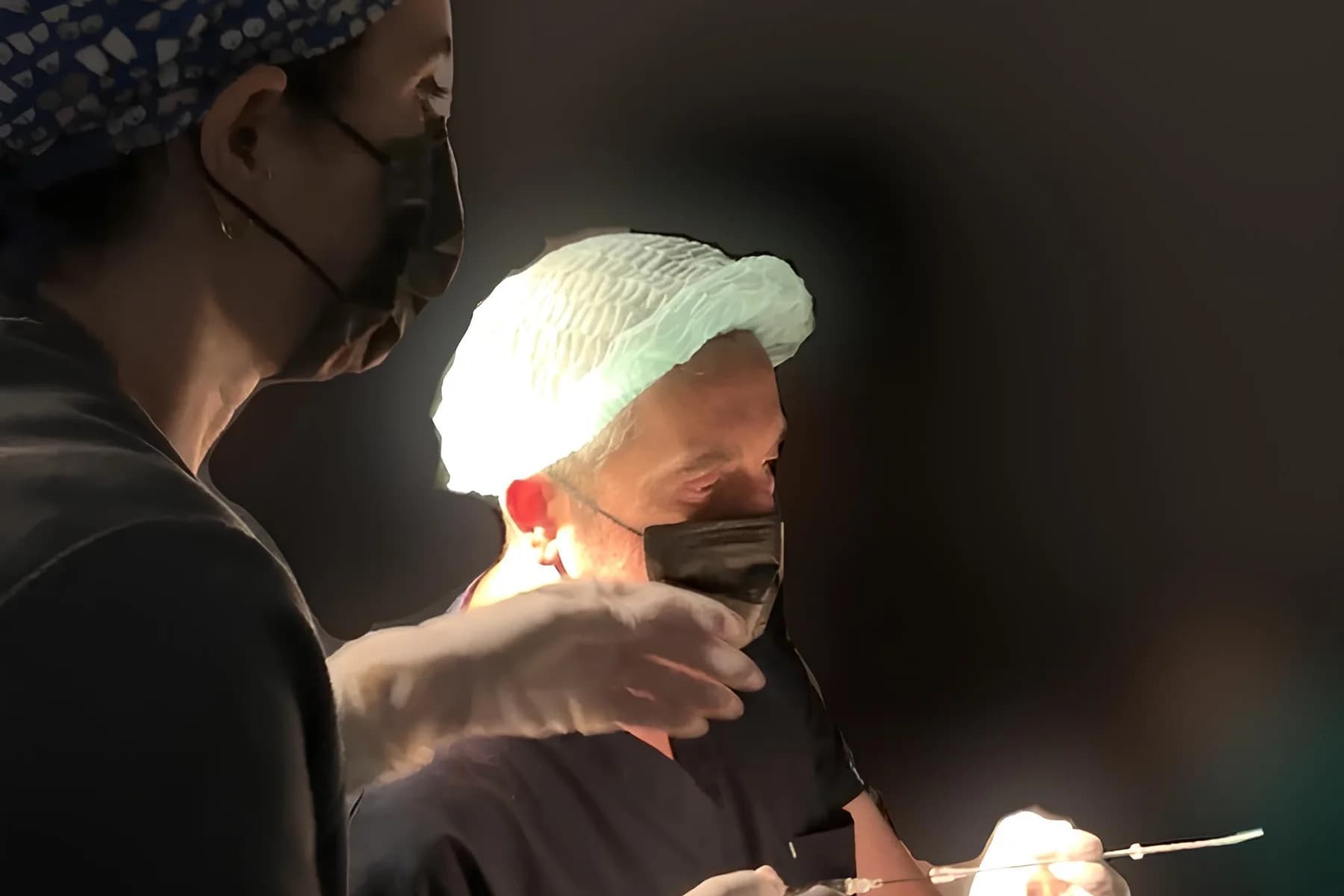
Because egg retrieval is performed under anesthesia, the patient feels no pain. For this reason, our patient must come in on an empty stomach. The procedure takes about 15-20 minutes. The follicles are reached vaginally with the help of a needle. The fluid inside each follicle is aspirated together with the egg and collected in a tube. These fluids are then examined under a microscope in the embryology laboratory. The eggs that are found are placed in special culture media in special dishes. Once all the follicular fluid has been examined, the eggs are placed in the incubator. Typically 10-15 eggs are retrieved, but this number varies greatly from patient to patient. Sometimes as many as 40 eggs are retrieved, while in very rare cases no eggs can be retrieved at all. A few hours after the procedure, our patients are checked and discharged.
Creating embryos through fertilization
The fertilization method is chosen according to the quality of the male partner's sperm. If sperm quality is sufficient, conventional IVF is used. In this method, the woman's eggs are placed in special solutions in special dishes and combined with the male partner's sperm sample. The motile sperm cells are then expected to fertilize the eggs in their natural environment.
For patients with problems in sperm quality or count, the microinjection (ICSI) method is used. In this technique, a single sperm cell is injected into a single egg using a special microscope and micromanipulators. After fertilization, the eggs are cultured in special devices called "incubators" that mimic the environment of the uterus. Sixteen to eighteen hours after fertilization, two nuclei, one from each prospective parent, form inside the egg. Fertilization is confirmed under the microscope, and the patient is informed of the result.
Fertilized egg:

Embryo development
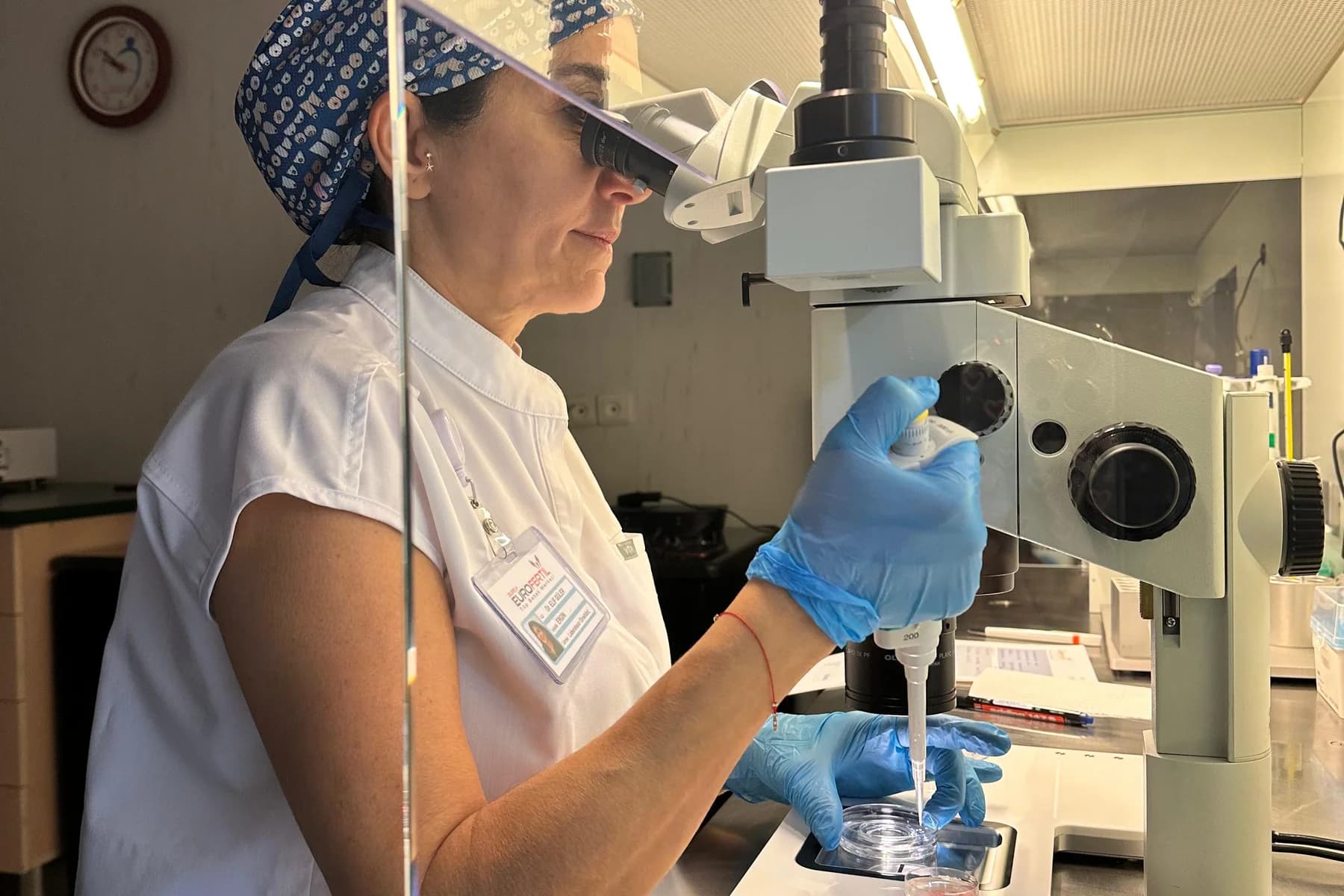
To follow their development, the embryos are taken out of the incubator daily and checked under the microscope. The purpose of these checks is to monitor embryo development, which is a highly dynamic process, and to select the embryo with the highest chance of pregnancy. Embryos cultured in an EmbryoScope device can be monitored 24/7 by a camera system without being removed from their environment. This makes embryo selection more accurate and safer.
Fertilized embryos divide and increase their number of cells. An embryo should have a specific number of cells for each day of development. Many different systems and grading scales are used to evaluate embryos, and each embryology laboratory should establish its own selection criteria.
While embryo quality is determined primarily by egg and sperm quality, the equipment of the embryology laboratory, the materials used and the experience of the embryologist are also important factors affecting embryo quality. That is why, at Bursa Eurofertil IVF Center, we follow all innovations closely and apply them competently in our laboratory. Good embryo development means a high chance of pregnancy. Therefore,
the day of embryo transfer is decided by taking into account the number of eggs retrieved, the number of well-developing embryos, the patient's age and any previous attempts.
Before embryo transfer, our embryologist informs the couple in detail about their embryos.

Embryo transfer
Since embryo transfer is a painless procedure, our patients do not receive anesthesia. On transfer day, our patients come to our center at the scheduled time having eaten and with a full bladder (needing to urinate). Before the transfer, our embryologists inform them in detail about their embryos. The experience of the embryologist who selects the embryo to be transferred and of the doctor who performs the transfer is crucial to success.
Embryo transfer can be performed between day 2 and day 5 after egg retrieval (OPU). The embryo or embryos, loaded by the embryologist into a thin plastic catheter, are transferred by our doctor into the woman's uterus.
After embryo transfer, the hormone "progesterone" is given daily, vaginally or by injection, to strengthen the lining of the uterus and support embryo implantation. This hormone support continues until the pregnancy test.
After the transfer, half an hour of rest at our center is sufficient. Longer bed rest does not increase the chance of pregnancy. We recommend that our patients return to their daily lives after one day of rest at home. Of course, until the pregnancy test they should avoid heavy lifting and sudden movements, should not smoke or consume coffee or alcohol, and should not have sexual intercourse. You can go to work or travel. Patients who come from out of town can return home.
Pregnancy test
Pregnancy is detected by measuring Beta HCG in the blood 12 days after embryo transfer. It does not matter whether you have eaten before this test. You can have it done at our clinic, and patients who come from out of town in particular can also have it done in their own city.
Since a urine test may not reflect the definitive result, we advise our patients not to use one. A blood Beta HCG test should be done for a definitive diagnosis of pregnancy.
We invite patients with a positive pregnancy test back 10 days later for an ultrasound to confirm the gestational sac. Patients who come from out of town can also have the sac checked where they live.
For detailed information or to book an appointment, you can call us at any time on 0224 251 50 00 or reach us via our WhatsApp line at 0530 886 52 63.
Frequently Asked Questions
On which day of the menstrual cycle does IVF treatment start?
The start day of IVF treatment can vary depending on the treatment protocol used. In the antagonist protocol, which is commonly used today, treatment usually starts on day 2 or 3 of the cycle. A personalized treatment plan is created after evaluating the patient's age, ovarian reserve, hormone levels and previous treatments.
How many days does IVF treatment take?
Ovarian stimulation with medication usually takes about 8-12 days. Egg retrieval is then performed, and the timing of the transfer is set according to how the embryos develop. If a fresh embryo transfer is planned, the active phase of treatment is usually completed within about 2-3 weeks. The duration may vary depending on the patient and the protocol used.
What is OPU?
OPU (Oocyte Pick-Up) is the procedure in which the eggs developed during IVF treatment are collected from the ovaries. Under transvaginal ultrasound guidance, the fluid inside the follicles is aspirated with a thin needle, and the eggs are searched for under the microscope in the embryology laboratory.
Is egg retrieval painful?
Because egg retrieval is usually performed under anesthesia or sedation, the patient feels no pain during the procedure. It typically takes about 15-20 minutes, and the patient can be discharged after a few hours of observation.
How many hours after the trigger shot are the eggs retrieved?
Egg retrieval is usually performed approximately 34-36 hours after the trigger shot. Giving the injection at the specified time is important so that the eggs can be retrieved at the right stage of maturity.
When is the sperm sample given on egg retrieval day?
If fresh sperm is to be used, the sperm sample is usually collected on the day of egg retrieval. After preparation in the laboratory, sperm with suitable motility and characteristics are selected for fertilization.
What is the difference between IVF and ICSI?
In conventional IVF, the eggs and sperm are combined in the laboratory and the sperm is expected to fertilize the egg on its own. In ICSI, or microinjection, a single selected sperm cell is injected directly into the egg using micromanipulation.
When do you find out whether the eggs have fertilized?
Fertilization is usually checked approximately 16-18 hours after the IVF or ICSI procedure. In a normally fertilized egg, two pronuclei representing the genetic material from the mother and the father are expected to be visible.
For how many days are embryos monitored in the laboratory?
Depending on the characteristics of the patient and the embryos, embryos can usually be monitored in the laboratory from day 2 up to day 5 or 6. Embryos that reach the day 5 or day 6 stage of development are called blastocysts.
On which day is embryo transfer performed?
The day of embryo transfer is determined by the number of embryos obtained, their development, the patient's age, treatment history and clinical evaluation. The transfer can be performed at the cleavage stage, such as on day 2 or 3, or at the blastocyst stage on day 5. It cannot be said that a day 5 transfer is better for every patient; the transfer day should be decided individually.
Is embryo transfer painful?
Embryo transfer is usually a quick and painless procedure, so most patients do not need anesthesia. The embryo or embryos are placed inside the uterus with the help of a thin transfer catheter.
Why should you come to embryo transfer with a full bladder?
A full bladder can help provide a clearer ultrasound view of the uterus and the transfer catheter. For this reason, patients may be asked to drink a certain amount of water before the transfer and not to empty their bladder.
How long do you need to rest after embryo transfer?
Prolonged bed rest is generally not necessary after embryo transfer. After a short rest, the patient can return to daily life. However, the recommendations of the doctor overseeing the treatment regarding medication and physical activity should be followed.
Why is progesterone used after embryo transfer?
Progesterone plays an important role in preparing the lining of the uterus to support embryo implantation. For this reason, progesterone support may be given after embryo transfer at the dose and by the route determined by the doctor.
How many days after embryo transfer is a pregnancy test done?
According to our center's protocol, the pregnancy test is performed 12 days after embryo transfer by measuring Beta-hCG in the blood. A blood test is preferred because it allows the pregnancy to be evaluated and the Beta-hCG level to be tracked when needed.
Can you go to work after embryo transfer?
Unless your doctor advises otherwise, you can return to normal daily life and go to work after the transfer. It may be wise to avoid heavy physical activity and intense exercise.
How many eggs need to be retrieved in IVF treatment?
The ideal number of eggs is not the same for every patient. The number of eggs that can be retrieved depends mainly on age, ovarian reserve and the treatment protocol used. In treatment, what matters is not only the number of eggs but also the characteristics of the mature eggs obtained and the embryos that develop.
Does every retrieved egg become an embryo?
No. Not every retrieved egg may be mature; not every mature egg may fertilize; and not every fertilized egg may develop far enough to reach transfer or freezing. This is a natural part of the biological process of IVF treatment.