The New Name for PCOS: What Is PMOS?

The condition we have known for years as polycystic ovary syndrome (PCOS), which affects one in every 8 women of reproductive age worldwide, is going through a truly historic turning point in medicine.
With a global consensus report published on May 12, 2026 in The Lancet, one of the world's most prestigious medical journals, the syndrome has officially been renamed Polyendocrine Metabolic Ovarian Syndrome (PMOS).
This fundamental change is far more than a new label. It is a medical shift that reflects the true nature of the condition, helps prevent delays in diagnosis and places treatment in a more holistic framework from start to finish. In this guide, we explain the scientific background of PMOS and its effects on daily life and fertility as clearly as possible.
Why Did PCOS Become PMOS?
For decades, the term "polycystic ovary" (an ovary containing multiple cysts) in the old name caused serious misunderstanding and understandable anxiety among women. Many patients believed they had mass-like "pathological cysts" in their ovaries that needed to be surgically removed.
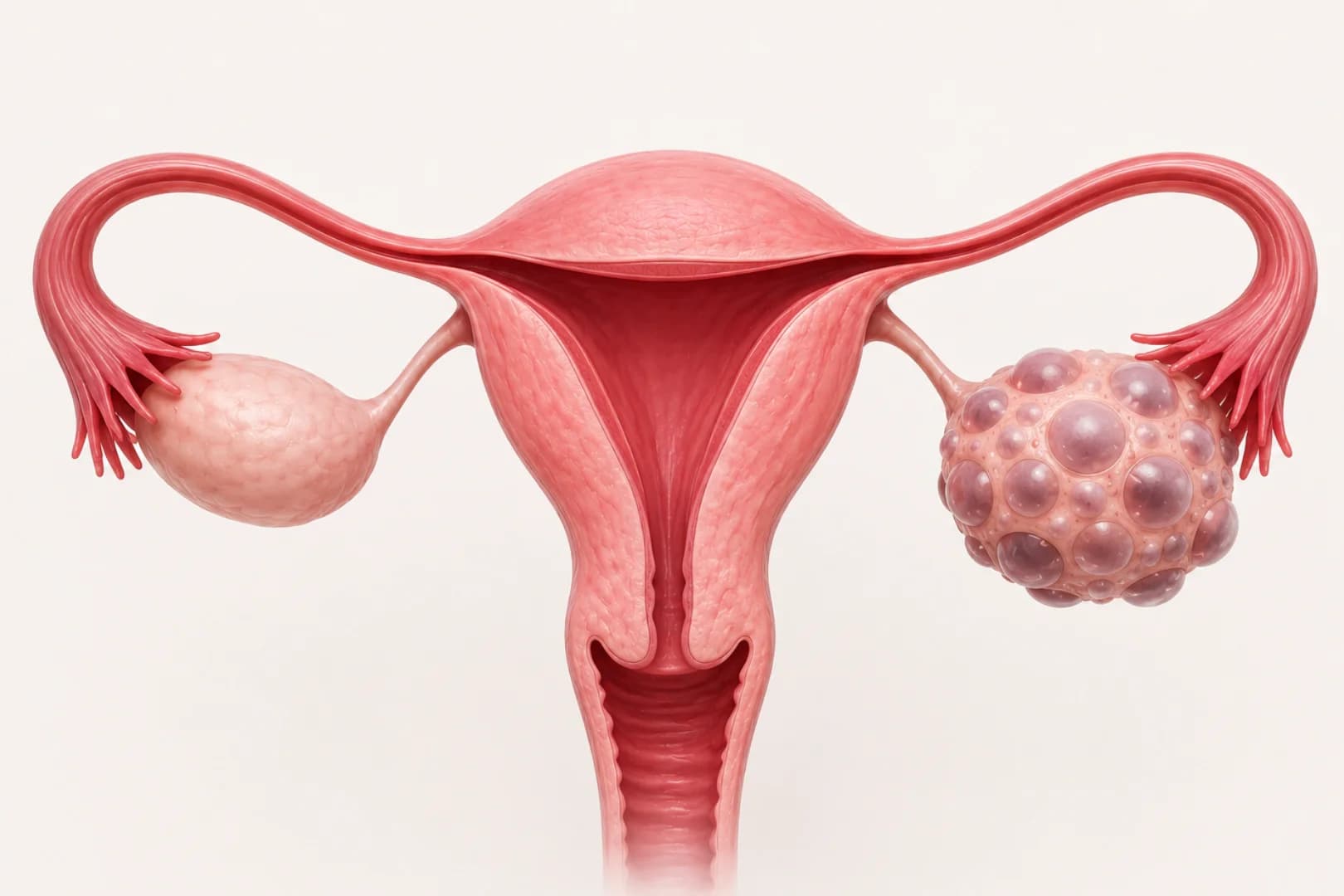
In reality, there are no true cysts in this condition. The structures seen on ultrasound are tiny, harmless early egg sacs (follicles) whose development stalled at an early stage and which could not mature and release their egg.
The decision to change the name came after massive global surveys (a Delphi process) led by Professor Helena Teede of Monash University in Australia, which lasted 14 years and involved more than 22,000 doctors, researchers and patient organizations. The old name made the condition look like nothing more than "a cyst problem confined to the ovary," overshadowing the patient's insulin resistance, cardiovascular risks and hormonal imbalances.
Each word of the newly adopted name, PMOS (Polyendocrine Metabolic Ovarian Syndrome), describes precisely what is happening in the body:
- Polyendocrine (multiple hormone systems): Emphasizes that the condition does not stem from a single organ, but from a shared communication problem involving insulin, male hormones (androgens) and the ovulation centers in the brain.
- Metabolic: Shows that the condition is directly linked to weight control, blood sugar metabolism, fatty liver and long-term heart health.
- Ovarian: Indicates that ovulation problems and egg quality remain one of the main centers of the process.
- Syndrome: Rather than describing a single disease, it refers to a group of signs (symptoms) that may seem unrelated but, when they occur together, form a specific medical or psychological picture.
Rest Assured: The condition itself has not changed; the medical world simply now views it in a more accurate and broader way. If you were previously diagnosed with PCOS, there is no need to panic. Your records and treatment history remain fully valid. Because the transition will take hold gradually in Turkey and worldwide (over roughly 3 years), we will continue to see "PCOS/PMOS" used together in prescriptions and internet searches for some time.
What Are the Symptoms of PMOS? What Is Your Body Telling You?
PMOS does not follow the same course in every woman; it is a syndrome that can wear "personalized" masks. One patient may only have irregular periods, while in another, excess hair growth and weight problems may dominate despite regular periods. The most common clinical signs are:
- Irregular or Infrequent Periods: Because ovulation does not occur, menstrual cycles may last longer than 35 days, there may be fewer than 9 periods a year, or no periods at all for months.
- Signs of High Androgen (Male Hormone) Levels: Increased coarse, dark hair growth on the body, especially on the chin, chest and around the belly (hirsutism), stubborn acne that continues after adolescence, very oily skin, and male-pattern hair loss (thinning at the crown).
- Metabolic and Weight Problems: Rapid weight gain, especially fat around the belly and waist, sugar cravings, hunger attacks and great difficulty losing weight (due to underlying insulin resistance).
- Effects on Fertility: Difficulty getting pregnant despite unprotected intercourse, because ovulation does not happen regularly.
How Is PMOS Diagnosed?
The name change has not altered the widely accepted Rotterdam diagnostic criteria. For a woman to be diagnosed with PMOS, at least two of the following 3 criteria must be present, based on a physical examination, detailed ultrasound and blood tests taken on specific days of the menstrual cycle:
- Ovulatory Dysfunction (ovulation disorder): Periods that are irregular, delayed or have stopped completely.
- Hyperandrogenism (androgen excess): Either visible clinical complaints (excess hair, acne, etc.) or elevated hormones such as free testosterone in blood tests.
- Polycystic Ovarian Morphology (PCOM): On ultrasound, many small follicles (usually more than 20), 2-9 mm in diameter, lined up in the ovary almost like a string of pearls (or, in adults past adolescence, a markedly high AMH level in the blood).
Note: When making the diagnosis, other endocrine causes that can produce similar symptoms, such as thyroid disease or high prolactin (the milk hormone), must be ruled out.
Treatment Approach: A Roadmap for Those Who Do and Do Not Want a Baby
Although PMOS cannot be completely eliminated, it is a condition that can be managed extremely well with the right strategies. The treatment plan is shaped entirely around the woman's current life goals and whether or not she wants to have a child:
If a Pregnancy Is Not Planned in the Near Future:
- Regulating the Menstrual Cycle: Birth control pills or periodic progesterone treatment are used to prevent the lining of the uterus (endometrium) from thickening due to long periods without menstruation, which could otherwise turn into a cancer risk later on.
- Hormonal Balancing: Medications with anti-androgen properties are used to suppress excess hair growth and acne.
- Metabolic Support: In patients found to have insulin resistance or hidden diabetes, blood sugar regulating medications (such as metformin) that help cells use sugar properly are added to treatment under a doctor's supervision.
If a Pregnancy Is Desired (Fertility Treatments):
PMOS is the most common cause of ovulation-related infertility in women; however, it is also the group with some of the most rewarding treatment results in medicine.
- First Step (Ovulation Induction): If there is no other infertility factor (blocked tubes, male factor, etc.), oral pills that gently stimulate the ovaries are used (in current guidelines, letrozole is the first choice, with clomiphene citrate as an alternative). With these medications an egg is matured, and a natural pregnancy is planned with the help of a trigger shot.
- Second Step: If ovulation cannot be achieved with medication, or if pregnancy does not occur after a few attempts, treatment moves on to IUI (intrauterine insemination) or directly to IVF (in vitro fertilization).
How Successful Is IVF in Patients with PMOS?
Because women with PMOS have a very large number of early eggs in their ovaries (a high ovarian reserve), they are an advantaged patient group in the IVF laboratory, with high pregnancy success rates. Many eggs can be collected in a single attempt, which increases the chance of selecting good-quality embryos.
At the same time, however, the ovaries also carry a risk of overresponding to medication, so treatment must always be individually planned at an experienced center. With the right patient management, IVF success rates in women with PMOS are quite high.
Personalized Medication Dosing
The ovaries of women with PMOS are highly sensitive to IVF injections. Standard doses can cause far too many eggs to grow at once in these patients. That is why doctors start the process with much lower, individualized doses (GnRH antagonist protocol), based on the patient's age and AMH level. The goal is quality, not quantity.
OHSS (Ovarian Hyperstimulation Syndrome) Risk and Management
If the ovaries are overstimulated, a condition called OHSS can develop, causing fluid to build up in the body. In modern medicine today, this risk has been reduced to almost zero through choosing the right trigger shot (agonist trigger) and careful dose management.
Uterine Rest and Freezing All Embryos (Freeze-All)
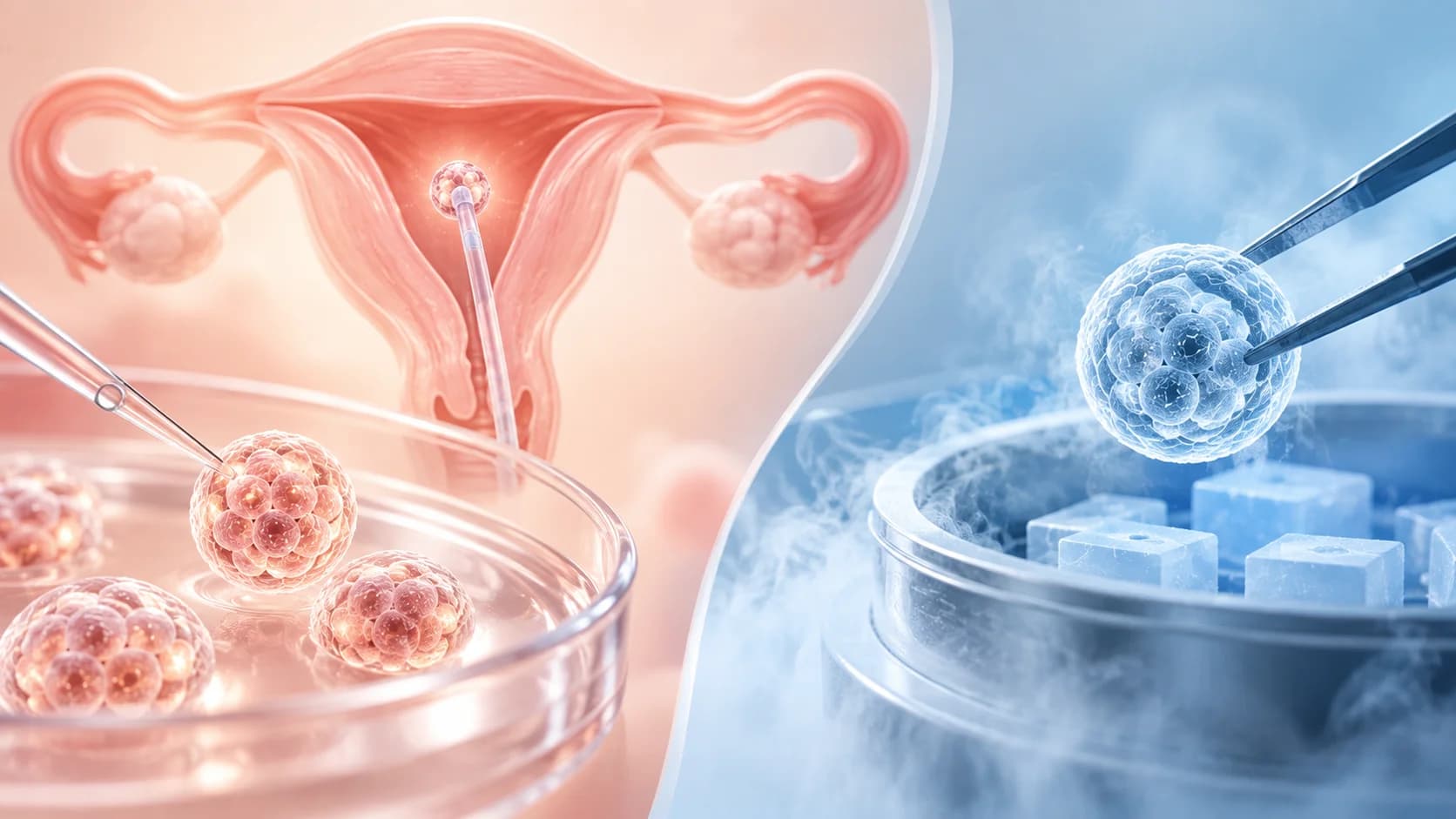
The gold-standard approach for IVF patients with PMOS is the "Freeze-All" strategy, meaning all embryos are frozen. When many eggs develop, estrogen levels in the body rise sharply. This high-hormone environment can temporarily impair the ability of the uterine lining to accept an embryo.
In these cases, the good-quality embryos obtained from the collected eggs are frozen. The mother-to-be rests for 1 or 2 menstrual cycles, her hormones return completely to normal and the uterus settles. The transfer is then performed into an entirely natural uterine environment, which both fully prevents OHSS risk and maximizes the chance of pregnancy.
The Most Powerful Tool for Women with PMOS: Lifestyle and Nutrition
No medical treatment can have as lasting and powerful an effect as the right lifestyle changes. Because PMOS is a metabolic syndrome, losing just 5 to 10 percent of body weight (for example, a woman weighing 80 kg losing 4-8 kg) can help hormones rebalance on their own and allow ovulation (and natural pregnancy) to start without any medication.
- Eating Habits: Choose foods with a low glycemic index, meaning foods that do not cause sudden spikes in blood sugar. Instead of packaged sugars, white flour, pastries and soft drinks, focus on fiber-rich vegetables, whole grains, healthy fats (olive oil, avocado) and high-quality protein (a Mediterranean-style diet).
- The Power of Exercise: At least 150 minutes a week of moderate-paced walking, Pilates or cardio exercise breaks down the cells' resistance to insulin. As cells respond to insulin again, the pressure on the ovaries is lifted.
- Sleep and Stress Management: Chronic stress worsens PMOS by increasing androgen (male hormone) secretion from the adrenal glands. Regular sleep and stress control are the unsung heroes of treatment.
Conclusion
Polycystic ovary syndrome (PCOS), now known by its new international name Polyendocrine Metabolic Ovarian Syndrome (PMOS), is a chronic condition that affects not only the ovaries but the entire hormonal and metabolic system. Although the name has changed, the diagnostic criteria and treatment principles remain the same. With early diagnosis, lifestyle changes and individualized treatment planning, long-term health risks can be reduced and the chance of pregnancy can be significantly increased.
Women who are planning to have a baby, or who experience irregular periods, excess hair growth, acne or ovulation problems, should seek an evaluation without delay at a center experienced in gynecology and IVF. This helps protect metabolic health and ensures the best time for fertility treatment is not missed.
Frequently Asked Questions
I have PMOS. Should I freeze my eggs for later years?
In women with PMOS, ovarian reserve (AMH levels) already declines much more slowly than in their peers, and egg counts are consistently high. Unless there is an additional risk factor such as early menopause or an endometrioma ("chocolate cyst" caused by endometriosis), routine egg freezing at a young age is not needed simply because of PMOS.
How is PMOS treated in single women or young girls?
Great care must be taken when diagnosing young girls, especially during adolescence. In this age group, birth control pills are a safe choice both to regulate periods and to ease skin problems such as acne and excess hair. Weight management with the support of a nutrition specialist should always be part of the process.
Can PMOS be cured completely?
PMOS is a chronic, meaning long-term, condition caused by a combination of genetic and environmental factors. It is not a disease that simply "disappears"; however, with the right diet, an active lifestyle and appropriate medical support when needed, it is a condition whose symptoms can be fully controlled and which need not affect quality of life at all.
Are PMOS and PCOS the same condition?
Yes. Only the name and definition of the condition have changed. Women who were diagnosed with PCOS are now considered to have PMOS.
Last updated: