What Is Sperm DNA Damage (DNA Fragmentation)? How Does It Affect Pregnancy and IVF Treatment?

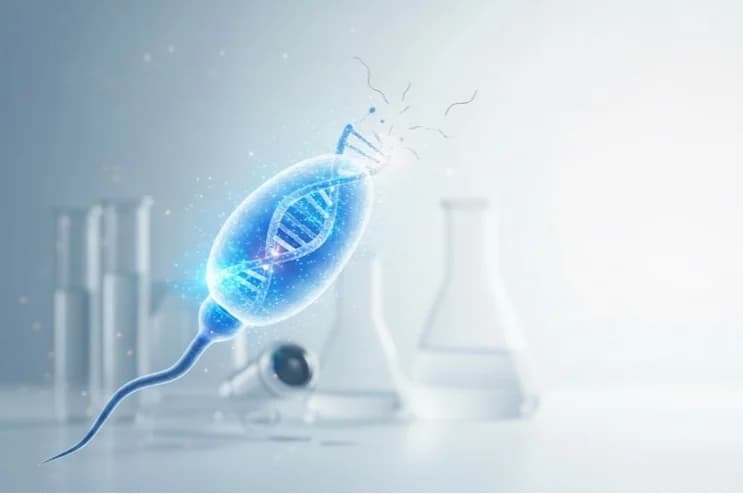
Sperm DNA damage, also known as sperm DNA fragmentation, is a parameter that is becoming increasingly important in the evaluation of male infertility. Even when sperm count, motility and morphology look normal on a standard semen analysis, the genetic material carried by the sperm cell may be damaged. This can lower the chance of natural pregnancy, have a negative effect on embryo development and, in particular, influence success in IVF treatment.
In this article, we take a detailed look at what sperm DNA damage is, why it occurs, who is affected, how it is measured, how it affects IVF treatment and which treatment options are available.
What Is Sperm DNA Damage?
The first step in evaluating male infertility is usually a spermiogram (semen analysis). This test assesses sperm count, motility and morphology. Sometimes, however, pregnancy cannot be achieved or IVF attempts fail repeatedly even though all of these values are normal. One of the reasons for this may be sperm DNA damage, also called sperm DNA fragmentation
Sperm DNA is the structure that carries the father's genetic information to the egg. For the embryo to develop healthily after fertilization, this genetic material must be intact. Single- or double-strand breaks in the DNA chain are defined as sperm DNA damage and can adversely affect embryo development.
Today, sperm DNA fragmentation is one of the key male factors that is recommended to be investigated, especially in cases of unexplained infertility, recurrent pregnancy loss and failed IVF attempts.
What Is the Difference Between Sperm DNA Damage and a Spermiogram?
A common misconception is that a normal spermiogram result means the sperm DNA is healthy as well. In reality, a conventional semen analysis only evaluates sperm count, motility and morphology; it provides no information about DNA integrity.
For this reason, some men with normal sperm count, motility and morphology may have advanced sperm DNA damage, while not every man with an abnormal spermiogram will necessarily have DNA damage.
In this respect, the sperm DNA test is an advanced evaluation method that complements the standard semen analysis.
Why Is Sperm DNA Important for a Healthy Pregnancy?
In the first days after fertilization, embryo development is largely supported by the cellular mechanisms provided by the egg. From roughly the 8-cell stage onward, the genetic material from both the father and the mother becomes active.
When there is serious damage to the sperm DNA, embryo development may slow down, blastocyst development may be adversely affected, embryo development may arrest and the risk of pregnancy loss may increase.
Research shows that high sperm DNA damage may be associated with the following:
● A lower chance of natural pregnancy
● Impaired embryo development
● Lower blastocyst formation rates
● An increased risk of recurrent pregnancy loss
However, sperm DNA damage alone does not determine the outcome of a pregnancy. The woman's age, egg quality, embryo quality and other causes of infertility also play an important role in success.
What Causes Sperm DNA Damage?
Many factors can disrupt sperm DNA integrity. Oxidative stress is considered one of the most common causes. Oxidative stress refers to the damage that free oxygen radicals cause in sperm cells.
Main risk factors:
● Varicocele: may raise testicular temperature
● Smoking: may increase oxidative stress
● Obesity: may increase free radical production
● Diabetes: may increase cellular damage
● Infection: may increase ROS production
● Chemotherapy: may impair sperm production
● Advanced paternal age: may increase DNA fragmentation
Some of these factors can be treated, while others can be reduced through lifestyle changes.
Who Should Have a Sperm DNA Test?
A sperm DNA test is not necessary for every infertility patient. In certain situations, however, it can provide valuable information.
Situations in which the test may be considered:
● Unexplained infertility
● Recurrent IVF failure
● Recurrent pregnancy loss
● Presence of varicocele
● Advanced paternal age
● Poor embryo development
● Inability to conceive despite a normal spermiogram
Does everyone need a sperm DNA test? No. The test is particularly informative in specific patient groups and should be planned based on the physician's assessment.
How Is Sperm DNA Damage Measured?
A standard semen analysis cannot assess DNA integrity. Special laboratory tests are used for this purpose.
The most commonly used tests:
● TUNEL test: one of the reliable methods that directly shows DNA breaks.
● SCSA: evaluates sperm chromatin structure using flow cytometry.
● SCD (Halo test): a practical method that shows DNA integrity indirectly.
● COMET test: can evaluate DNA damage in a single sperm cell in detail.
Each test has its advantages and limitations. The method to be used is chosen based on the laboratory's experience and the clinical need.

What Is the TUNEL Test?
The TUNEL (Terminal deoxynucleotidyl transferase dUTP nick end labeling) test is one of the methods that directly labels breaks in sperm DNA. In the laboratory, DNA breaks are identified using special dyes and the proportion of damaged sperm is calculated.
Advantages of the TUNEL test:
● It evaluates DNA breaks directly
● It gives reliable and reproducible results
● It is widely used in clinical research
Results may be reported with different reference ranges depending on the method used by the laboratory.
How Are Sperm DNA Damage Results Interpreted?
The values obtained from a sperm DNA fragmentation test are interpreted according to the rate of sperm DNA damage. Results are generally divided into three groups: normal, moderate risk and high risk. This classification provides important information about the genetic integrity of the sperm and helps in assessing the chance of pregnancy.
General interpretation approach:
- Below 15%: Sperm DNA damage is low. DNA integrity is preserved in most of the sperm, which is considered favorable for fertilization and healthy embryo development.
- Between 15-30%: There is a moderate level of sperm DNA damage. In this group, pregnancy can be achieved naturally or with IVF treatment; however, it is recommended to investigate the causes of the DNA damage and take the necessary measures.
- Above 30%: There is advanced sperm DNA damage. This can adversely affect fertilization, embryo development and pregnancy success. In patients found to have high DNA damage, it is important to investigate the underlying causes and create a personalized treatment plan.
Important Note: There are no clearly standardized cut-off values for sperm DNA damage test methods, and each method has its own advantages and disadvantages, which makes it difficult to declare any one of them universally preferable. Results must always be interpreted together with the reference ranges of the laboratory performing the test and by a physician experienced in reproductive health.

How Does Sperm DNA Damage Affect IVF Treatment?
Sperm DNA damage is one of the important male factors that can affect pregnancy success in IVF and especially in microinjection (ICSI) treatment. Even if sperm count, motility and morphology look normal on a conventional semen analysis, breaks in the sperm DNA can lead to negative outcomes in the later stages of embryo development
1. Embryo development and embryo quality may be affected
One of the most important features of sperm DNA damage is that its effect may appear not during fertilization but in the later stages of embryo development. This is known as the "Late Paternal Effect".
A sperm carrying damaged DNA can successfully fertilize an egg. The first cell divisions mostly continue thanks to the maternal proteins and RNAs stored in the egg. However, once the embryo begins to activate its own genome from around day 3, the quality of the genetic material from the father becomes important.
When DNA damage is high:
- embryo development may slow down,
- cell divisions may become irregular,
- fragmentation in the embryo may increase,
- the likelihood of forming a good-quality blastocyst may decrease.
For this reason, sperm DNA integrity is important not only for fertilization but also for healthy embryo development.
2. Blastocyst development and the chance of implantation may decrease
In IVF treatment, the goal is for the embryo to reach day 5 or 6, develop to the blastocyst stage and then successfully implant in the uterus.
Many studies in cases with high sperm DNA damage report that:
- blastocyst development rates may decrease,
- embryos may stop developing at an early stage,
- the implantation potential of the embryo (its ability to attach to the uterus) may be adversely affected
Not every man with high DNA damage will experience implantation failure. However, it is accepted that this risk increases, especially in patients with advanced DNA fragmentation.
3. The risk of recurrent miscarriage may increase
High sperm DNA fragmentation may be associated in particular with early pregnancy loss. For this reason, it is important to evaluate sperm DNA fragmentation in couples who experience recurrent pregnancy loss.
4. IVF and ICSI success may be reduced
Current studies show that high sperm DNA fragmentation may:
● reduce the rate of good-quality embryo development
● adversely affect blastocyst formation
● lower implantation rates
● reduce clinical pregnancy and live birth rates
● increase the risk of miscarriage.
However, IVF success does not depend on sperm DNA damage alone. The woman's age, egg quality, embryo quality and laboratory conditions are also extremely important.
How Is Sperm DNA Damage Treated?
In many cases, sperm DNA damage can be reduced or brought under control. The treatment approach is personalized according to the cause and severity of the DNA damage and the couple's pregnancy plans.
1. Lifestyle changes
The first step in treating sperm DNA damage is improving lifestyle.
Recommended changes:
● Quitting cigarettes and e-cigarettes
● Reducing alcohol consumption
● Exercising regularly
● Maintaining an ideal weight
● Adopting a Mediterranean-style diet
● Avoiding habits that raise testicular temperature
● Choosing loose, comfortable clothing
2. Treating infections
Infections of the male genital tract are one of the important causes of sperm DNA damage. Studies show that approximately 8-35% of infertile men have a genital tract infection or inflammation.
Leukocytes produced during infection generate large amounts of reactive oxygen species (ROS). Under normal conditions, the antioxidant system in the seminal plasma can neutralize these molecules. However, when ROS production exceeds the antioxidant capacity, oxidative stress develops and single- or double-strand breaks can occur in the sperm DNA.
For this reason, appropriate antibiotic treatment is given to patients in whom an infection is detected.
3. Oral antioxidant therapy
Oxidative stress is one of the most common mechanisms of sperm DNA fragmentation. For this reason, antioxidant therapy is one of the most frequently used supportive treatments today.
The antioxidants most commonly used in clinical practice include:
- Vitamin C
- Vitamin E
- Coenzyme Q10
- L-carnitine
- Zinc
- Selenium
- N-acetylcysteine (NAC)
These molecules may help protect sperm DNA integrity by neutralizing free oxygen radicals.
That said, the same effectiveness may not be achieved in every patient. Currently, there is no internationally accepted standard treatment protocol on which antioxidant combination should be used, at what dose and for how long. For this reason, antioxidant therapy should always be planned under a physician's supervision.
4. Varicocele treatment
Varicocele, which develops as a result of the enlargement of the testicular veins, is one of the most common surgically correctable causes of male infertility.
Varicocele is seen in approximately 15% of men in the general population and approximately 35% of infertile men. In men with secondary infertility, this rate can rise to 70%.
Varicocele raises testicular temperature, increases oxidative stress and can cause damage to both nuclear and mitochondrial sperm DNA.
Especially after microsurgical subinguinal varicocelectomy:
- the DNA Fragmentation Index (DFI) may decrease,
- sperm motility and count may improve,
- natural pregnancy and IVF success rates may increase.
Since the sperm production cycle takes about 72-90 days, the effect of surgery is usually assessed after 3-6 months.
5. Sperm selection in assisted reproductive techniques
If sperm DNA damage remains high despite treatment, methods aimed at better sperm selection can be used in the laboratory:
● Density gradient method
● Microchip
● PICSI
● MACS
● IMSI
The aim of these methods is to support embryo development by selecting sperm with lower DNA damage. However, there is currently no conclusive scientific evidence that any sperm selection method completely eliminates DNA-damaged sperm. For this reason, these techniques are used in suitable patient groups and in line with clinical need.
6. Short-term sexual abstinence
In some patients, a short abstinence period may help obtain sperm with lower DNA damage. This approach can be considered especially before IVF treatment.
7. Retrieving sperm from the testis (TESE / TESA)
In selected patients, particularly those with a history of recurrent ICSI failure, sperm can be retrieved directly from the testis and evaluated.
How Long Does It Take for Sperm DNA Damage Treatment to Work?
Since sperm production takes about 72-90 days, the effect of treatment is usually assessed after 3 months. Tests performed immediately after starting treatment may therefore not reflect the true improvement. In most patients, repeating the sperm DNA fragmentation test after 3-6 months is recommended.
Timeline:
● 0-3 months: lifestyle adjustments and start of treatment
● Month 3: first follow-up assessment
● 3-6 months: repeat test and analysis of treatment response
How Much Does a Sperm DNA Test Cost?
The cost of a sperm DNA fragmentation test may vary depending on the test method used, the laboratory's technical infrastructure and any additional evaluations required. For this reason, it is not appropriate to apply a standard fee for every patient.
Under applicable healthcare regulations, current pricing for diagnostic and treatment procedures cannot be published on the website. For the most accurate information, please contact the center directly.
Frequently Asked Questions
Can sperm DNA damage occur with a normal spermiogram?
Yes. A standard semen analysis does not evaluate DNA integrity. Sperm DNA damage may therefore be present despite a normal spermiogram result.
Can sperm DNA damage be treated?
Yes. Depending on the underlying cause, improvement can be achieved with lifestyle changes, varicocele treatment, clearing infections and, in suitable patients, antioxidant therapy.
Does everyone with high sperm DNA damage have to undergo IVF?
No. The treatment decision should not be based on the DNA test result alone, but on the couple's overall clinical evaluation.
Does taking antioxidants completely reverse DNA damage?
No. Antioxidants may be beneficial, especially in cases related to oxidative stress, but they may not be sufficient on their own for every patient.
Does varicocele cause sperm DNA damage?
Yes. Varicocele can adversely affect sperm DNA integrity by increasing testicular temperature and oxidative stress.
Does sperm DNA damage prevent natural pregnancy?
No. High DNA damage may reduce the likelihood of pregnancy, but on its own it does not completely prevent natural conception.
Does sperm DNA damage affect IVF success?
Yes, it can. Adverse effects have been reported, particularly on embryo development, blastocyst formation and pregnancy loss.
If the test result is high, does that mean we cannot have a child?
No. Today, thanks to lifestyle adjustments, treatment of the underlying cause and assisted reproductive techniques, pregnancy can be achieved despite high sperm DNA damage.
Last updated: